Dec 2023

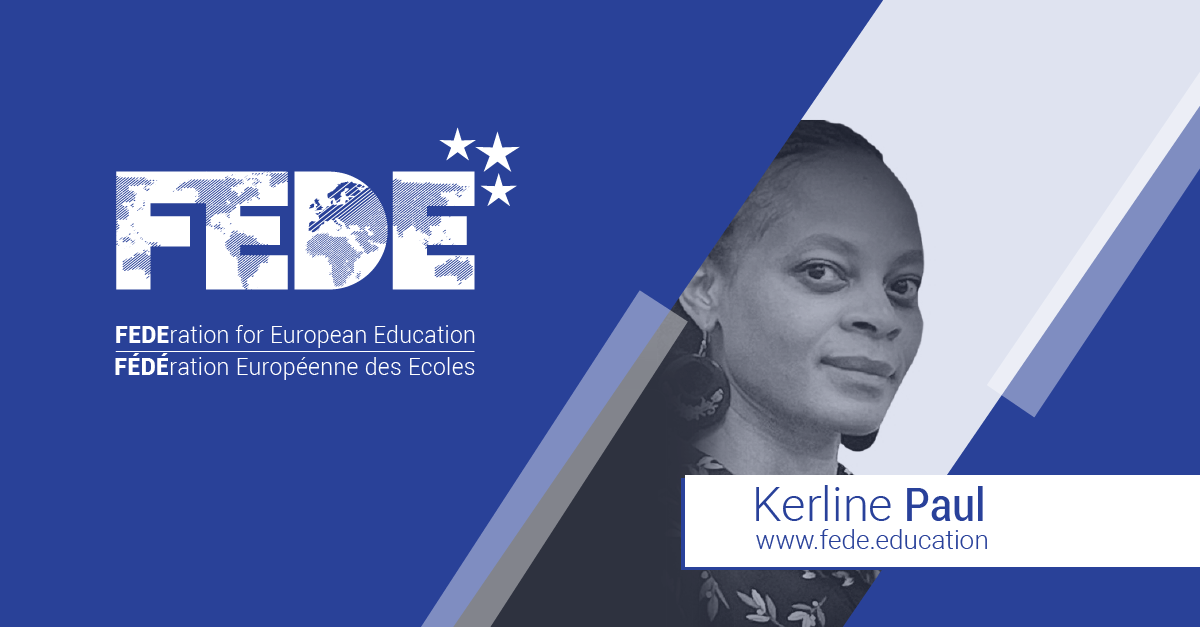
Kerline Paul: ‘Boosting the identity and reputation of solidarity-based economics’

Abstract

Kerline Paul has worked as a bilingual executive assistant for over 20 years. In preparing meetings and files, in organising seminars and training courses, and in managing customers, she has honed her capacity for initiative, fast turnarounds and resilience to stress. Since 2020 she has worked for Enéal (Action Logement Group), which aims to rethink […]

FEDE Academic Board — Research & Policy Committee

Published Dec 2023

Kerline Paul has worked as a bilingual executive assistant for over 20 years. In preparing meetings and files, in organising seminars and training courses, and in managing customers, she has honed her capacity for initiative, fast turnarounds and resilience to stress. Since 2020 she has worked for Enéal (Action Logement Group), which aims to rethink accommodation solutions for older persons.

Kerline Paul’s career follows on from a FEDE European Master’s in Business Management and Strategy. Now, having caught the research bug, she plans, thanks to the opportunity provided by the FEDE, to pursue a dream of hers: to develop and write a DBA thesis.

Kerline Paul’s research will focus on the positive impact of non-profit organisations that are committed to social and solidarity-based economics. In her view, the social innovation capacity of these organisations drives a type of societal engagement that makes them worthy of recognition as major and distinct economic actors.

In short, she wishes to demonstrate that civil society organisations, like commercial organisations – though they operate differently – have an essential role to play in liberal economies.

Publication Details

Type

Date

Dec 2023

Read time

1 min read

Authors

FEDE Academic Board — Research & Policy Committee

Related Publications

27 Jul 2026

The FEDE is a network of 500 private higher education and vocational training establishments sharing a common goal of high standards, quality and ambition: putting students at t

31 May 2024

The year 2024 promises to be a period of electoral density unequalled since universal suffrage was first introduced in 1792 by a pioneering country, France, at a time when only men had the right to vote. On a global scale, this year no fewer than 4.1 billion people – half the world’s population – will […]